
Customers pick up our hemp-derived THCP products and ask the same question almost every time: What is THCP, exactly? It is a phytocannabinoid discovered in 2019, and early lab data shows it binds to the brain's CB1 receptors roughly 33 times more tightly than delta 9 THC. Here is what the science shows and what you should know before you buy.
What is THCP? The basics explained
THCP stands for tetrahydrocannabiphorol. What is THCP at a molecular level? It looks almost identical to delta 9 THC but carries a seven-carbon alkyl side chain where THC has only five. That two-carbon extension turns out to matter quite a bit for how tightly the molecule attaches to your cannabinoid receptors.
The 2019 discovery team, working at the University of Modena and Reggio Emilia in Italy, published their findings in a peer-reviewed study indexed on PubMed (PMID 31766592), showing THCP binds to CB1 receptors with approximately 33 times greater affinity than delta 9 THC in in vitro assays. CB1 receptors sit primarily in the brain and central nervous system and are the main target for THC's psychoactive effects.
THCP occurs naturally in the cannabis plant at very low concentrations, typically below 0.1% of total cannabinoids. In the commercial hemp market, THCP is made by converting hemp-derived CBD through a controlled isomerization process in a licensed lab. This conversion method is similar to what is used for delta 8 THC, which our delta 8 vs delta 9 THC overview covers in more detail.
What is THCP and why does it bind CB1 more strongly than delta 9 THC?
What is THCP in terms of receptor binding? When you eat a hemp gummy, cannabinoids travel through your bloodstream and reach receptors in your endocannabinoid system. CB1 receptors drive the head-focused effects most people associate with THC, and binding affinity is how we measure how tightly each molecule locks in.
Binding affinity is measured by a Ki value. A lower Ki means the molecule attaches more tightly. In the 2019 study, THCP had a CB1 Ki of 1.2 nM compared to delta 9 THC's 40.7 nM, which works out to roughly 33 times tighter binding. The chart below puts that in visual perspective.
Higher receptor binding does not automatically translate one-to-one into subjective experience. Everyone's endocannabinoid system is different. But it does explain why users report needing much less THCP than delta 9 THC to reach a similar effect level. GummyGurl hemp-derived THCP gummies are dosed conservatively at 1-3 mg per piece for this reason.
The National Center for Complementary and Integrative Health notes cannabinoid research is still at an early stage, and no human clinical trials on THCP specifically have been published. The receptor binding data is real, but predicting individual response from it alone is not possible.
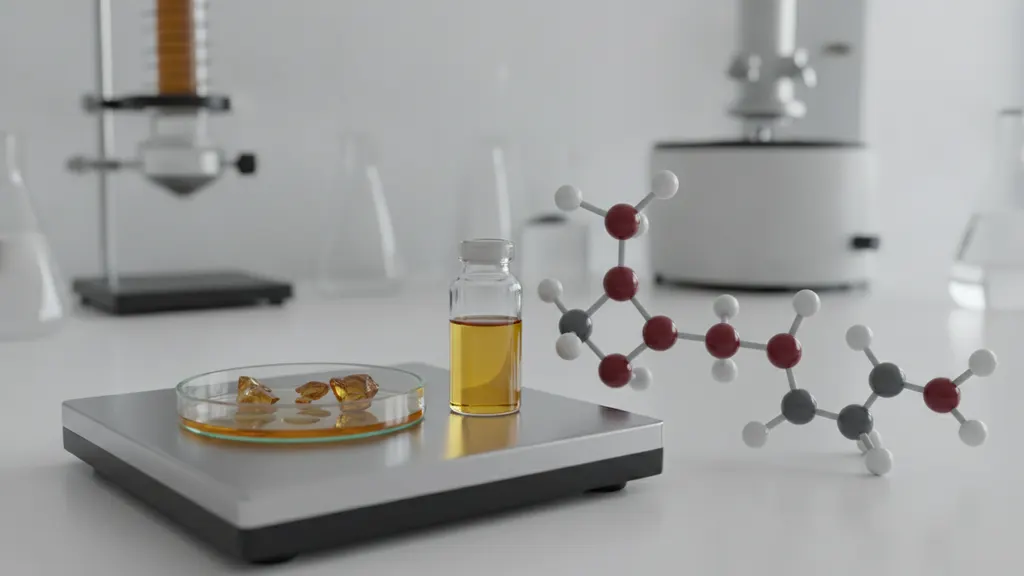
What is THCP doing in hemp gummies and extracts?
What is THCP doing in finished hemp products? Mostly showing up in small amounts alongside other cannabinoids in what formulators call a minor cannabinoid stack. Blending THCP with delta 9 THC, delta 8 THC, or CBN creates a layered effect profile that many users prefer over single-cannabinoid products.
At GummyGurl, we use hemp-derived THCP because it allows a lower total milligram count per gummy while still delivering a noticeable effect. Every batch goes through independent third-party lab testing, and the certificate of analysis (COA) is posted on our lab results page before we ship a single unit. The COA shows cannabinoid potency, heavy metals, pesticides, and residual solvents.
In gummies, THCP distillate is incorporated into the base alongside terpenes for flavor and other cannabinoids for layered effects. Vape cartridges and tinctures also use THCP distillate, but gummies remain the most popular format because of consistent per-piece dosing. Our delta 9 hemp gummies guide covers the base product most people start with before moving to THCP formulas.
Is THCP legal under the 2018 Farm Bill?
The 2018 Farm Bill, passed by Congress and signed into law in December 2018, removed hemp from the Controlled Substances Act and defined hemp as cannabis with less than 0.3% delta 9 THC by dry weight. Hemp-derived cannabinoids meeting this threshold are federally lawful.
THCP is not listed as a scheduled substance on the DEA's controlled substance scheduling list as of this writing. This is consistent with other hemp-derived minor cannabinoids produced from compliant hemp that do not exceed the delta 9 threshold in the finished product.
However, state law differs from federal. Several states have passed their own restrictions on psychoactive hemp cannabinoids, and the rules shift regularly. If you live outside our standard delivery states, check your local laws first. The FDA has not approved THCP for any medical purpose and has not issued enforcement policy on hemp-derived THCP in food or dietary supplements. We do not make drug claims on our products.
How to use THCP: starting doses and what to expect
What is THCP in terms of dosing? Because THCP binds to CB1 receptors far more tightly than delta 9 THC, the milligram math looks very different. A 10 mg delta 9 THC gummy is a common starting dose for experienced users; the equivalent effect from hemp-derived THCP may come from just 1-3 mg. Here is a practical framework:
- THCP-naive, no prior cannabinoid experience: Start at 1 mg. Wait a full 90 minutes before considering more.
- Experience with delta 8 or delta 9 gummies: 2-3 mg is a reasonable starting range. Still wait 90 minutes before re-dosing.
- First week: Allow at least 24 hours between sessions so your body can calibrate its response.
The Cleveland Clinic notes that edible hemp cannabinoids take longer to produce effects than inhaled forms, often 45-90 minutes, because they pass through the digestive system first. First-time users who add more product thinking it has not worked are the most common source of overconsumption. Start low. Be patient. Do not drive or operate machinery after taking THCP gummies. Nothing in this post is medical advice.
What is THCP vs. other hemp cannabinoids?
What is THCP when you put it side-by-side with the cannabinoids most people already know? The table below covers five hemp-derived compounds you are most likely to encounter in edible products, along with their key differences in CB1 binding, effective dose, and psychoactivity.
| Cannabinoid | Side Chain | CB1 Affinity vs. Delta 9 | Typical Starting Dose | Psychoactive? |
|---|---|---|---|---|
| THCP | 7-carbon | ~33x | 1-3 mg | Yes |
| Delta 9 THC | 5-carbon | 1x (baseline) | 5-10 mg | Yes |
| Delta 8 THC | 5-carbon | ~0.5x | 10-20 mg | Mild |
| CBD | 5-carbon | Minimal | 15-50 mg | No |
| CBN | 5-carbon | Low | 5-25 mg | Mild |
Delta 9 THC is the most studied cannabinoid in the hemp and cannabis literature and the reference point for most potency discussions. Delta 8 THC binds to CB1 at lower affinity than delta 9, producing milder effects. CBD does not bind meaningfully to CB1 at all, which is why it produces no intoxicating effects at any dose.
THCP sits at the top of the CB1 potency chart based on current receptor data. No hemp-derived cannabinoid tested to date shows higher CB1 affinity. CBN also interacts with CB1 but at far lower levels and is primarily noted for potential sleep-supportive properties. None of these compounds have been approved by the FDA for any medical use, and the NCCIH notes cannabinoid research continues to evolve.
For a broader look at how CB1 and CB2 receptors work across all major hemp cannabinoids, our hemp cannabinoid guide is a good next read.
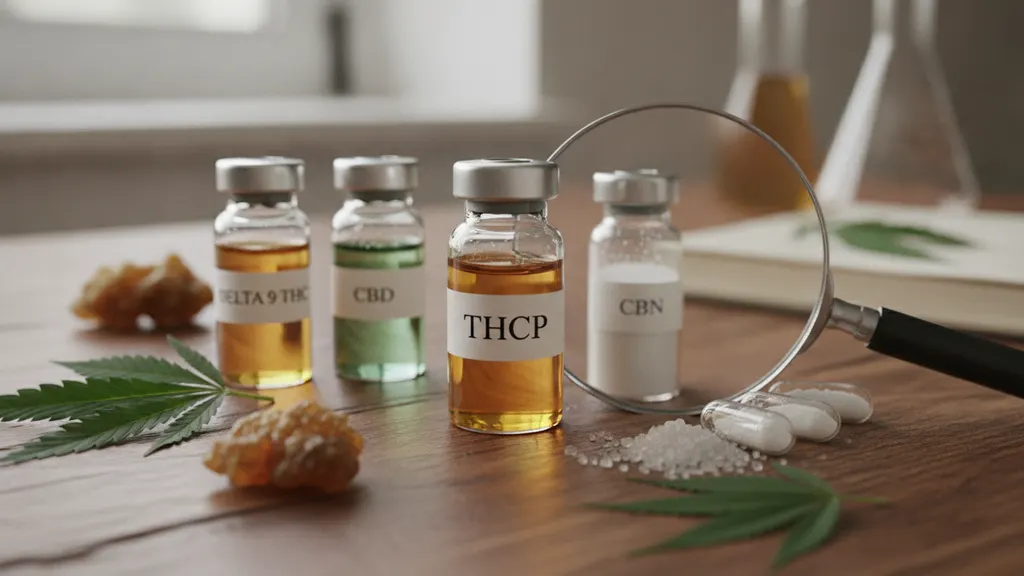
Frequently asked questions
What is THCP and where does it come from?
THCP, or tetrahydrocannabiphorol, is a phytocannabinoid first identified in 2019 by a team at the University of Modena and Reggio Emilia. Their paper, published in a Scientific Reports study indexed on PubMed, showed THCP has a seven-carbon alkyl side chain rather than the five-carbon chain in delta 9 THC, giving it much tighter CB1 receptor binding. Commercially, hemp-derived THCP is produced by isomerizing CBD from legal hemp plants, placing it within the hemp-derived category under the 2018 Farm Bill when the finished product contains less than 0.3% delta 9 THC. It is present in the plant at concentrations typically below 0.1% of total cannabinoids.
Is THCP legal in the United States?
Hemp-derived THCP is not a federally scheduled substance as of this writing. The 2018 Farm Bill legalized hemp-derived cannabinoids when the finished product contains less than 0.3% delta 9 THC, and THCP does not appear on the DEA's current controlled substance scheduling list. However, individual states retain the right to restrict or ban psychoactive hemp cannabinoids, and several have done so. Always verify your state's current hemp law before purchasing. The FDA has not approved THCP for any medical use and has not issued enforcement guidance specific to hemp-derived THCP in food or supplements.
How does THCP compare to delta 9 THC in potency?
In the 2019 discovery study, THCP showed approximately 33 times greater CB1 receptor binding affinity than delta 9 THC, with Ki values of 1.2 nM for THCP versus 40.7 nM for delta 9. Higher receptor affinity does not guarantee a proportionally stronger experience for every person since biology, tolerance, and metabolism all vary. This is why what is THCP translates to very different dosing than delta 9: most users start at 1-3 mg rather than 5-10 mg. The NCCIH notes human clinical research on minor cannabinoids remains limited, so most real-world data comes from anecdotal reports rather than controlled trials.
How long do THCP gummy effects last?
THCP gummies must pass through digestion before cannabinoids enter the bloodstream, so onset is typically 45 to 90 minutes, sometimes longer on a full stomach. Effects from hemp-derived THCP gummies are commonly reported to last 3 to 6 hours, though individual variation is wide. The Cleveland Clinic notes edible cannabinoids have more variable absorption than inhaled forms and that first-time users who add more product thinking it has not worked are the most common source of overconsumption. Start at 1 mg, wait the full onset window, and keep notes before adjusting your dose. Nothing here is medical advice.