
What is the actual difference between delta 8 vs delta 9, and why does one sit on hemp shop shelves while the other lives behind a state dispensary counter? Both are forms of THC, both come from cannabis sativa, and both can show up in gummies, but the chemistry, the legal route to market, and how each one makes a person feel diverge in ways product labels rarely explain. Here is the plain-English version, written by someone who formulates hemp-derived edibles for a living.
Hemp-derived THC under the 2018 Farm Bill
Hemp-derived THC means cannabinoids made from cannabis sativa plants containing less than 0.3% delta-9 THC by dry weight. The 2018 Agriculture Improvement Act, known as the Farm Bill, drew that line and removed compliant hemp from the federal Controlled Substances Act. Anything above 0.3% delta-9 is still federally classified as marijuana.
The full text of the law sits on the public record at the Congress.gov page for H.R.2 (115th Congress), the bill that became Public Law 115-334. Section 10113 is the part that redefined hemp. The wording matters because every legal argument about delta-8 hinges on it: if a cannabinoid is sourced from compliant hemp and the finished product still tests below 0.3% delta-9, it slots into the hemp category by default.
That default is exactly why delta-8 exploded between 2020 and 2023. Hemp produces tiny amounts of delta-8 naturally, but commercial-scale supply comes from converting hemp CBD into delta-8 through an acid-catalysed isomerization step. The FDA consumer update on delta-8 THC explains the process and the agency concerns about byproducts. The agency has issued warning letters to multiple delta-8 brands for unapproved drug claims and unsafe manufacturing practices. The delta 8 vs delta 9 question is one of the cleanest examples of what happens when a single statute opens a market faster than regulators can match it.
Delta 8 vs delta 9: chemical structure and how each is made
The delta 8 vs delta 9 distinction is almost embarrassingly small at the molecular level. Both are tetrahydrocannabinol, both share the molecular formula C21H30O2, and both bind to the CB1 receptor in the endocannabinoid system. The only difference is the location of one carbon-carbon double bond. In delta 9, the bond sits on the ninth carbon. In delta 8, it sits on the eighth. That single shift weakens the receptor binding affinity, which is why most users describe delta 8 as feeling roughly 50% to 70% as intense as the same dose of delta 9.
Delta-9 occurs naturally in cannabis flower at concentrations between 0.3% and 30%. Hemp cultivars stay under 0.3%; the higher numbers come from marijuana cultivars selected for THC content over decades. Delta-8 occurs naturally too, but in trace amounts under 1%. Commercial delta-8 gummies are not made by extracting that trace fraction. They are made by taking CBD, dissolving it in an organic solvent, adding an acid catalyst, and heating the mixture until the CBD rearranges into delta-8. The process can also produce delta-9, delta-10, and other isomers, which is one reason third-party COAs matter so much.
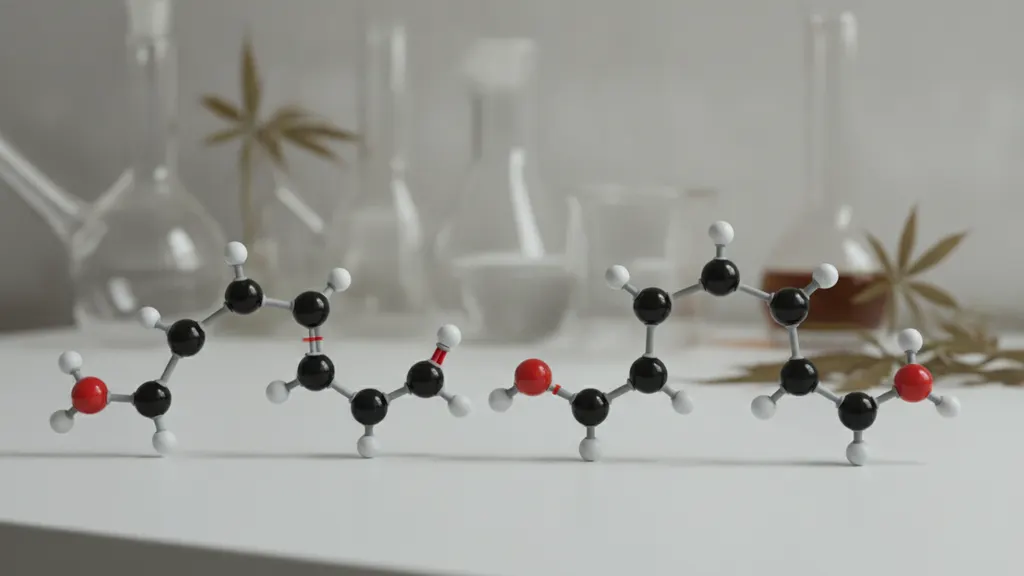
The conversion route is also why the DEA Interim Final Rule on hemp implementing regulations created friction. The DEA position is that synthetically derived tetrahydrocannabinols stay on Schedule I, regardless of plant origin. Industry attorneys argue that converting hemp CBD into delta-8 is not synthesis in the chemistry textbook sense, and lawsuits have produced split decisions across federal circuits. The Ninth Circuit 2022 ruling in AK Futures v. Boyd Street Distro is the most cited example.
Delta 8 vs delta 9: legal status across US states
The delta 8 vs delta 9 legal map shifted faster than almost any consumer product category since vape devices. Federal law treats both as hemp when they pass the 0.3% delta-9 threshold, but each state writes its own rules on top of that floor. Some states ban delta-8 outright. Others cap milligrams per serving. A few have moved to license delta-9 hemp gummies under existing alcohol or food-grade systems.
The NCSL hemp-derived cannabinoid regulation tracker keeps a current state-by-state list. As of November 2025 the tracker shows 17 states with active bans or severe restrictions on delta-8, including Colorado, New York, Vermont, Oregon, and Washington. Another dozen states have caps on serving size, total THC, or sale to anyone under 21.
| Cannabinoid | Federal hemp status | Common state action | Typical serving |
|---|---|---|---|
| Delta-9 (hemp-derived) | Legal under 0.3% by dry weight | Some states cap milligrams per serving or package | 5-10 mg per gummy |
| Delta-8 | Disputed; legal in most states, banned in 17 | Outright bans more common than for delta-9 | 10-25 mg per gummy |
| Delta-10 | Same status as delta-8 in most jurisdictions | Often included in delta-8 bans | 10-20 mg per gummy |
| HHC, THCP, THCV | Disputed novel cannabinoids | Newer state bans target these specifically | Varies widely |
For shoppers, the practical advice is to check both your state law and the destination state law if you ship a gummy across state lines. The FDA cannabis regulation overview covers federal interstate commerce rules, and the CDC MMWR report on delta-8 adverse events contextualises why some states moved quickly to restrict the category.
Delta 8 vs delta 9: effects, potency, and onset time
The delta 8 vs delta 9 experience comparison comes down to three measurable variables: receptor binding strength, dose per gummy, and how fast the cannabinoid crosses the gut and liver. Delta-9 binds CB1 receptors more tightly, which translates to a stronger psychoactive feeling per milligram. Delta-8 binds less tightly, which most users describe as a softer head effect and less anxiety at comparable doses.
Onset is roughly the same for both compounds when eaten in a gummy: most people feel the first effects between 30 and 90 minutes, peak around 2 to 3 hours, and tail off over 6 to 8 hours. The liver converts both delta-8 and delta-9 into 11-hydroxy-THC, the metabolite responsible for the long, body-focused edible experience. Smoked or vaporised hemp flower hits the bloodstream faster (5 to 10 minutes) but fades quicker.
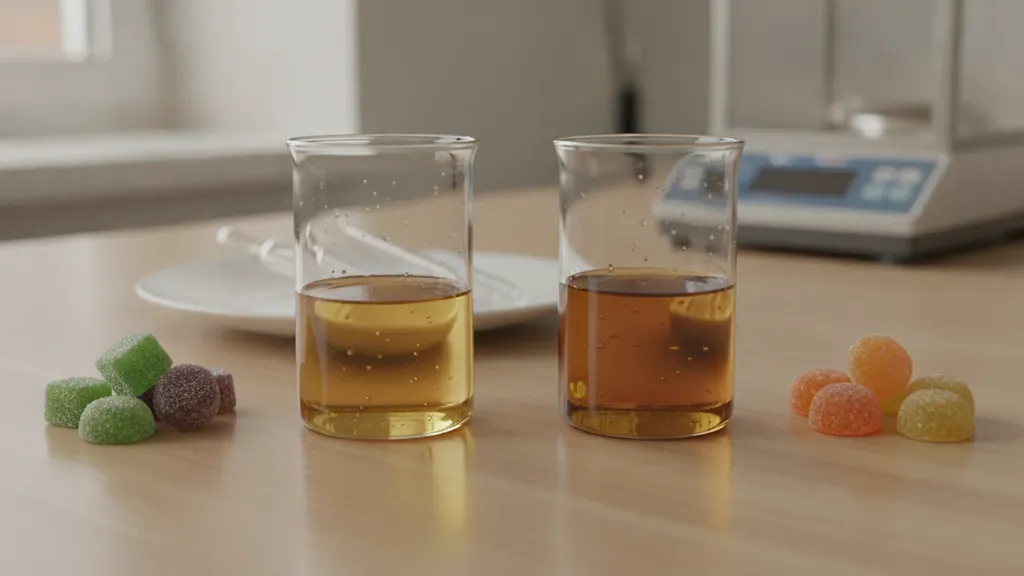
For primary-source reading on cannabinoid pharmacology, the NCCIH overview of cannabis and cannabinoids and the SAMHSA marijuana resource page both cover the basics without the marketing gloss you see on most retail blogs. Neither agency has authorised delta-8 or hemp-derived delta-9 as a therapeutic. They are sold as consumer products under the Farm Bill, not as medicine.
Reading a COA on hemp-derived gummies
Reading the delta 8 vs delta 9 percentages on a Certificate of Analysis is the single best habit a hemp shopper can build. A COA is the document a third-party lab issues after running a finished gummy batch through a cannabinoid panel and a contaminant panel. Every reputable hemp-derived brand publishes COAs by batch number. If a brand cannot show you the COA for the specific batch printed on your jar, that is the moment to put the jar back on the shelf.
For delta-8 gummies specifically, look at the cannabinoid section for delta-8 THC and verify it matches the milligram count on the front label. Watch for accidental delta-9 content above the 0.3% dry-weight federal threshold. The FDA warning letter round-up for CBD and delta-8 products lists brands that failed exactly this test.
For a deeper walkthrough of a real lab report, our guide to reading a hemp gummy COA goes line by line, and our CBD vs THC primer covers the other half of the cannabinoid story.
Dosing tips for hemp-derived edibles
The delta 8 vs delta 9 dosing math is straightforward once you know the rough potency ratio. Start low, wait, then decide. A starting dose of 2.5 to 5 mg of delta-9 (or 5 to 10 mg of delta-8) gives most adults a noticeable but manageable effect. Splitting a 10 mg gummy in half is a perfectly reasonable first step.
Eat food first. Cannabinoids are fat-soluble, and a meal with some fat in it raises bioavailability and smooths out the onset curve. Skip alcohol the first time you try a new product, because the combination amplifies dizziness and lowers your judgement of when you are actually feeling the effect. Wait the full 90 minutes before redosing. The most common adverse-event reports the CDC has logged for delta-8 involve people who took a second dose at the 45-minute mark because they thought the first was not working.
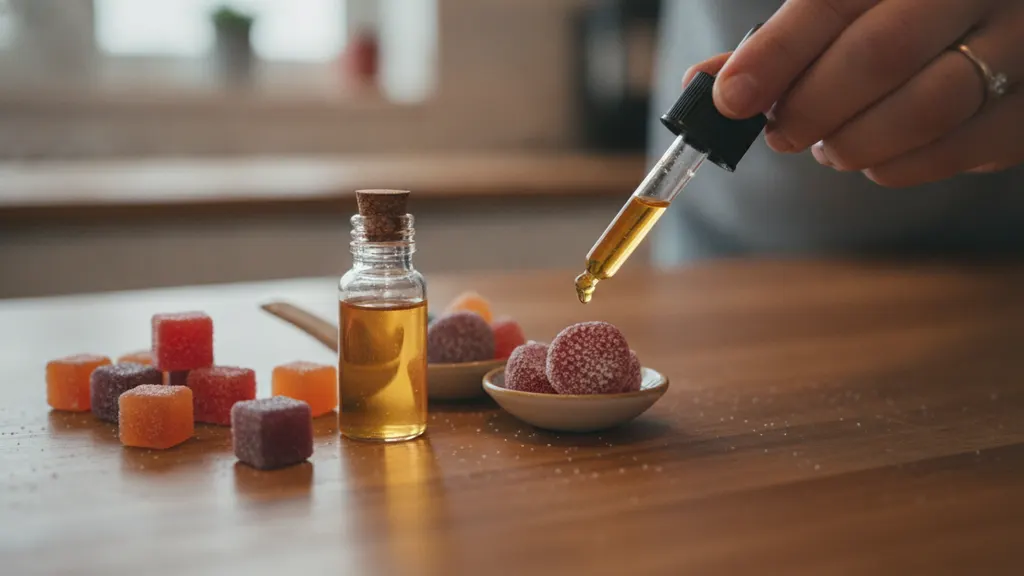
For a breakdown of starting doses by body weight and tolerance, see our hemp edible dosing chart. For state-by-state legal status updated monthly, our delta-8 legality tracker mirrors NCSL data with shopper-friendly summaries.
Frequently asked questions
Will delta 8 vs delta 9 show up on a drug test?
Both will. Standard urine drug tests do not distinguish between delta-8, delta-9, or other THC isomers; they screen for 11-nor-9-carboxy-THC, the shared metabolite. According to the SAMHSA drug testing technical bulletin, that metabolite stays detectable for 3 to 30 days depending on frequency of use, body fat, and hydration. If you have a job that drug tests, both delta-8 and delta-9 hemp-derived gummies are a hard pass. There is no commercial test that flags one and not the other, and the hemp-derived source is not a workplace defence under federal Department of Transportation rules.
How long do hemp-derived gummies stay in your system?
The psychoactive feeling fades over 6 to 8 hours after an oral dose. The metabolites stay longer. For occasional users (less than once a week), 11-nor-9-carboxy-THC is usually clear from urine within 3 to 10 days. For daily users it can linger 30 days or more. The CDC cannabis health effects page notes that pharmacokinetic data on delta-8 specifically is still thin, so most clinical estimates extrapolate from delta-9 data. Hair tests detect THC use for roughly 90 days. Saliva tests catch it for 24 to 72 hours. Plan accordingly.
Is delta-8 the same as CBD?
No. CBD (cannabidiol) is non-psychoactive and binds CB1 receptors only weakly. Delta-8 is psychoactive and binds CB1 with about 50-70% of delta-9 affinity. CBD is the starting material used to manufacture most commercial delta-8, which is where the chemistry overlap comes from, but the finished compounds feel completely different. The FDA warning letter archive for CBD products shows the agency views delta-8 as psychoactive and intoxicating, and not a CBD substitute for anyone wanting a non-impairing experience.
Can you mail order hemp-derived delta-9 gummies in the US?
In most states, yes. The 2018 Farm Bill protects interstate commerce of hemp products under the 0.3% delta-9 dry-weight rule. The USPS, UPS, and FedEx all permit shipping of compliant hemp products, with the carrier requiring the shipper to certify compliance. The USDA hemp page outlines the federal compliance framework. State-level shipping bans exist in Idaho, Kansas, and a handful of others. Always check the destination state specific rules before ordering, and choose retailers that publish COAs for every batch and verify age at purchase.
What is a sensible starting dose for someone new to hemp edibles?
For most adults with no previous cannabis experience, 2.5 mg of delta-9 or 5 mg of delta-8 is a reasonable starting point. That is half of a typical 5 mg gummy or a quarter of a 10 mg gummy. Take it with food, wait 90 full minutes before considering a second dose, and skip alcohol or other CNS depressants on first use. The NCCIH CBD overview recommends starting at the lowest available dose and titrating upward over several sessions rather than chasing a stronger effect on the first try.