
Can hemp gummies for pain relief do anything that ibuprofen does not? That is the honest customer question we hear every week at GummyGurl, and the honest answer is that peer-reviewed research is more interesting than the marketing makes it sound. JAMA survey data, Frontiers in Pharmacology animal studies, and the Sativex approval record all paint a partial but real picture. Here is what those sources actually show, and where the gaps still are.
Which cannabinoids in hemp gummies for pain relief have the strongest evidence?
CBD and low-dose THC together carry the most peer-reviewed pain evidence, with CBD studied more often for inflammation and THC studied more often for nociceptive and neuropathic pain. CBN, CBG, and minor cannabinoids show early promise but lack the trial volume to back firm claims. Most hemp-derived gummies on the US market lean on CBD plus a low delta-9 THC dose under the 2018 Farm Bill threshold.
The 2018 systematic review in Frontiers in Pharmacology on cannabinoid analgesia mapped which cannabinoids showed reproducible signals across preclinical models. CBD and THC dominated. CBG and CBC appeared in single-digit numbers of papers, and the picture has not shifted dramatically since. The evidence base for hemp gummies for pain relief stays concentrated on CBD and THC, so any vendor claim built around rare minor cannabinoids is closer to marketing than science.
For a buyer choosing a hemp-derived gummy, this means full-spectrum or broad-spectrum CBD products with a measurable THC fraction match what researchers actually study. Pure CBD isolate is also studied, but the entourage hypothesis of multi-cannabinoid synergy has more trial backing for pain than for sleep. For a primer on the formulation choice, see our piece on full spectrum vs isolate hemp gummies.
What types of pain do hemp gummies for pain relief work on best?
The research separates pain into nociceptive (tissue damage), neuropathic (nerve damage), and inflammatory categories. CBD shows the strongest animal-model evidence for inflammatory and neuropathic pain, while THC and 1:1 THC/CBD blends like Sativex have the strongest clinical evidence for cancer-related and multiple sclerosis spasticity pain. Acute injury pain has the thinnest cannabinoid evidence base of the three categories.
CDC chronic pain surveillance data estimates roughly 20% of US adults live with chronic pain, and the NCCIH cannabinoid guidance notes that current evidence is strongest for chronic pain and chemotherapy-induced nausea. Casual readers often miss that distinction. Gummies for a stubbed toe are not what the literature describes.
Post-workout soreness sits in the inflammatory bucket, where mechanistic evidence is plausible but human trial data is limited. If your goal is sleeping through soreness rather than killing the pain outright, the timing pattern of your dose matters as much as the cannabinoid profile in the jar.
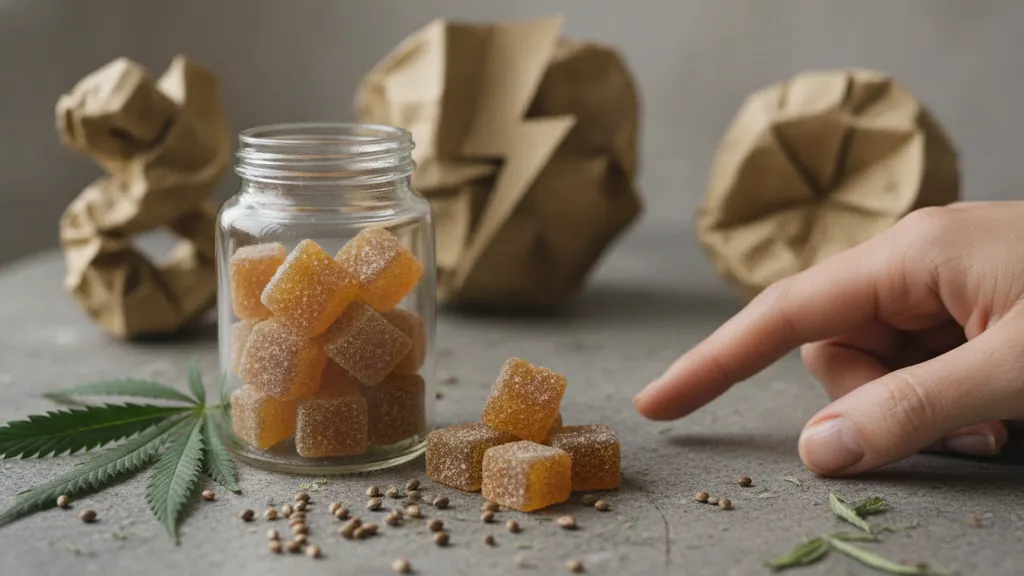
What peer-reviewed research says about CBD and THC for inflammation
Inflammation is the most-studied pain mechanism for CBD. Preclinical reviews report reproducible reductions in pro-inflammatory cytokines and inflammatory pain markers in rodent models. Human inflammation evidence is thinner but supportive. THC shows independent anti-inflammatory action through CB1 and CB2 receptors, which is why 1:1 blends often outperform single-cannabinoid arms in head-to-head trials.
The Frontiers in Pharmacology 2018 review highlighted that CBD reduces neuropathic and inflammatory pain in animal models, with effects observable at oral doses that translate roughly to 20 to 50 mg in adult humans. The National Center for Complementary and Integrative Health echoes the inflammation signal while flagging the gap between preclinical promise and finished human trials.
| Study type | Pain category | Evidence quality |
|---|---|---|
| Animal models (CBD) | Inflammatory, neuropathic | Strong preclinical signal |
| Sativex RCTs (1:1 THC/CBD) | MS spasticity, cancer pain | Approved in 30+ countries |
| Observational CBD surveys | Self-reported chronic pain | JAMA 2022: 30% report use for pain |
| Acute injury trials | Sprains, post-op pain | Limited human data |
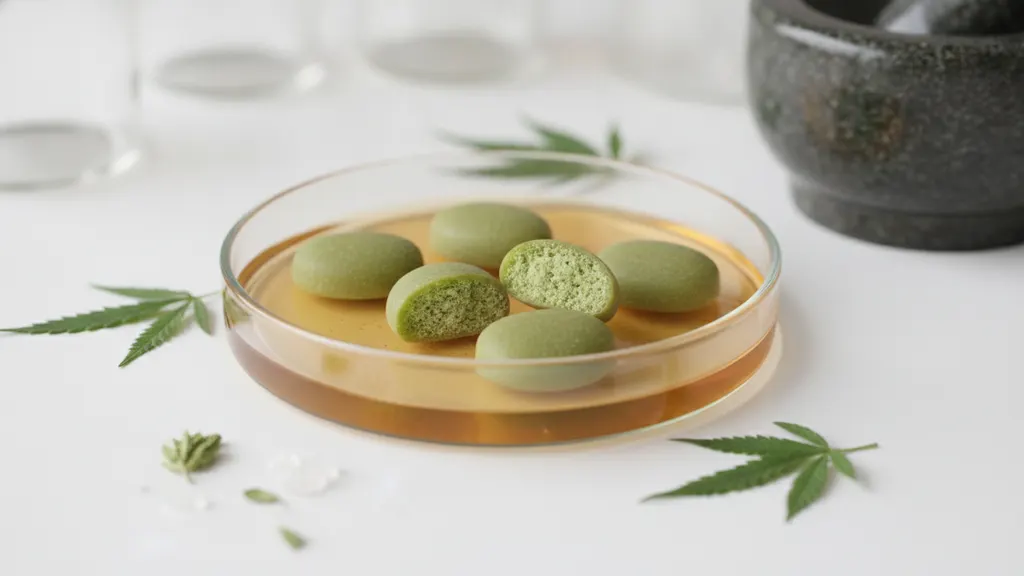
How long do hemp gummies for pain relief take to work?
Edibles are the slowest cannabinoid delivery method. Cleveland Clinic patient guidance and FDA cannabinoid pharmacokinetics summaries put gummy onset at 30 to 90 minutes, peaking around 60 to 120 minutes, with effects lasting 4 to 8 hours. Sublingual tinctures act in 15 to 45 minutes. Inhalation peaks within 10 minutes but fades faster.
That slow onset matters for chronic pain dosing with hemp gummies for pain relief. You cannot titrate a gummy the way you can a vape, so chronic pain users often pre-dose ahead of predictable flare windows rather than chasing pain after it starts. The FDA CBD regulatory page emphasises that the agency has not approved over-the-counter CBD products for pain, so any timing claims on a hemp label are vendor-generated, not federally validated.
For a deeper timing breakdown, our THC gummy timing guide walks through the absorption curve and why fed or fasted state shifts onset by 30 minutes either way.
Dosage ranges for hemp gummies for pain relief in research trials
Most peer-reviewed pain trials dose CBD between 20 mg and 300 mg per day, with some chronic pain protocols going higher. A standard 25 mg hemp-derived gummy sits at the low end of the studied range. THC pain dosing is typically 2.5 to 10 mg per session in clinical work, which lines up with low-dose hemp gummies under the 0.3% delta-9 Farm Bill threshold.
The Mayo Clinic CBD reference notes adult doses up to roughly 300 mg per day have been used in research for short periods, while higher Epidiolex doses used for seizures (not pain) reach 20 mg/kg/day. Pain trials rarely go that high. For someone trying hemp gummies for pain relief for the first time, the safe starting point is the lowest milligram count on the label.

Always cross-check the milligram figure on the label against the certificate of analysis. Our COA reading guide shows what a real lab report looks like and where vendors most often round up. Beginners often skip this step and end up with a product that is half the strength advertised, which is why our milligrams per gummy beginner guide exists.
Frequently asked questions
How do hemp gummies compare to ibuprofen for pain?
For people weighing hemp gummies for pain relief against over-the-counter NSAIDs, the key distinction is pain type. Direct head-to-head trials between hemp-derived CBD gummies and ibuprofen are rare. The evidence base is asymmetric. Ibuprofen has decades of placebo-controlled acute-pain trials, while CBD has stronger evidence for chronic and neuropathic pain than for acute injury pain. A 2022 JAMA Network Open CBD use survey found pain was the top self-reported reason for CBD use, but self-report is not a controlled comparison. For acute headaches or sprains, NSAIDs still have the stronger evidence base. For chronic ongoing pain, the cannabinoid evidence is more interesting but not stronger than well-established prescription therapies.
Are hemp gummies for pain relief legal in all 50 states?
Hemp-derived gummies under 0.3% delta-9 THC are federally legal under the 2018 Farm Bill, but individual states have layered their own restrictions on top. Several states ban or limit delta-8, delta-10, and high-potency hemp products. The FDA cannabinoid regulation page explains that even federally legal hemp products are not FDA-approved for pain. Always check your state attorney general guidance before ordering. State laws change frequently, so verify your state's current hemp product rules rather than relying on a retailer's blanket compliance claim. Our 2018 Farm Bill explainer covers the federal side in detail.
What dosage should I take for chronic pain?
People starting with hemp gummies for pain relief should begin at the lowest milligram count on the label and titrate up slowly. Researchers commonly use 20 to 300 mg of CBD per day in chronic pain protocols, often split across two or three doses, with low-THC arms running 2.5 to 10 mg per session. The NCCIH cannabinoid guidance notes that optimal pain dosing is still an open research question with no fixed answer. Start at the low end with a single 25 mg CBD gummy or a 5 mg THC gummy and titrate up over a week. Do not stack hemp gummies with other sedating medications without talking to a clinician first. The label dose is your starting point, not your target.
How long does the effect last once hemp gummies kick in?
Most users report effects lasting 4 to 8 hours, with the back half being a gentler tail than the peak. Cleveland Clinic patient education on CBD notes that edibles produce a longer-lasting but slower-building effect than inhalation, which is why some chronic pain users prefer them for overnight comfort. Duration shifts with body composition, gut transit, and whether you took the gummy fed or fasted. A fed-state gummy taken after a fatty meal will hit harder and last longer than the same dose on an empty stomach.
Can I take hemp gummies alongside prescription medications?
Cannabinoids share liver enzyme pathways including CYP3A4 and CYP2C19 with many prescription drugs, including blood thinners, some statins, and certain antidepressants. The Mayo Clinic CBD drug-interaction reference flags this directly. Do not combine hemp gummies with prescription pain medications, sedatives, or blood thinners without clinician oversight. People on warfarin, immunosuppressants, or seizure medication should be especially cautious about adding any cannabinoid product. A pharmacist medication review is cheap insurance before starting any cannabinoid product for ongoing pain.
Are there side effects I should watch for?
The most reported side effects across CBD trials are drowsiness, dry mouth, reduced appetite, and mild diarrhoea at higher doses. THC adds short-term cognitive effects and possible anxiety at higher doses. FDA consumer safety guidance warns against cannabis use during pregnancy and breastfeeding. If you experience persistent grogginess the morning after, your gummy dose is too high for your body. Drop to a lower-milligram product or split a gummy in half. Side-effect severity is dose-dependent, so the lowest effective dose is also the safest one.