
Customers ask me almost every day: how many mg THC gummy should I start with? It is the single most important question for a first-time buyer, because the difference between a calm afternoon and an unpleasant six hours sits inside one small candy. Hemp-derived gummies vary from 2.5 mg per piece up to 100 mg, and the dose that lands a regular user gently can flatten someone new.
Why how many mg THC gummy matters more than potency hype
How many mg THC gummy you eat sets almost the whole experience. Brand, flavour, and label design matter less than the milligram number on the front of the bag. The Centers for Disease Control reports a steady rise in edible-related ER visits among adults who guessed at dose.
Potency marketing pushes 50 mg and 100 mg single servings because the larger number sells. For a first-time buyer that single piece is too much. A hemp-derived edible carries the same intoxicating compound as a state-licensed dispensary product at high single-serve doses, and the body cannot tell the source apart, a point the FDA makes in its public guidance on cannabis-derived products.
I started GummyGurl after years of watching new shoppers buy whatever was on the shelf, eat one, and have a rough night. The fix is simple. Read the milligram count. Divide by two on your first try. Write down how it lands and adjust the next time.
That is also why GummyGurl prints the per-piece milligram dose, the total per package, and a QR code to the batch COA on every bag. If a package does not show all three, walk away. You can read more in our guide to reading a hemp gummy COA.
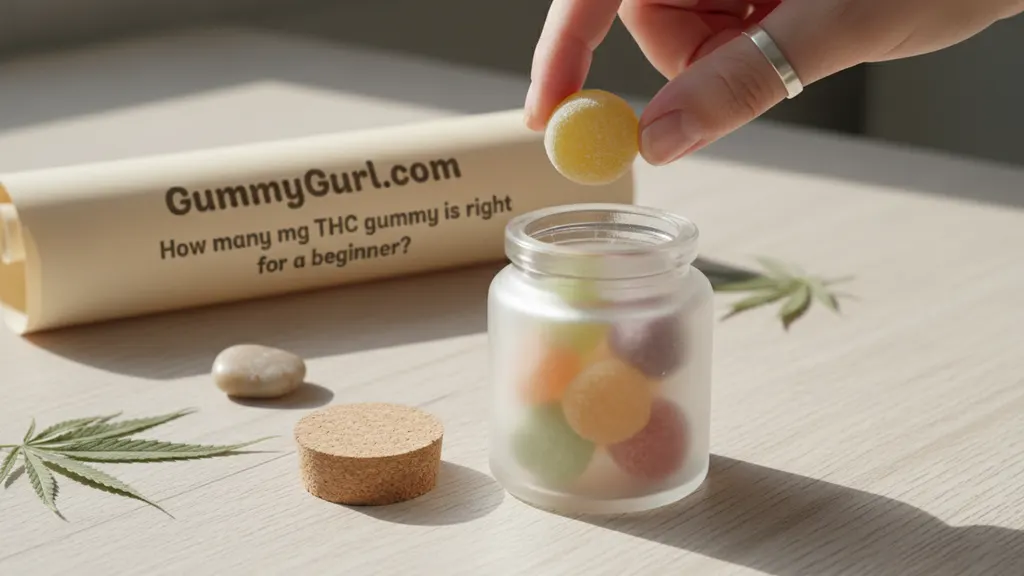
How many mg THC gummy is right for a beginner?
How many mg THC gummy makes a safe beginner dose? Start with 2.5 mg. That is half of the most common single piece (5 mg) and a quarter of a popular 10 mg gummy. Wait two hours before you eat any more. This pattern matches research summaries from the National Center for Complementary and Integrative Health.
Most adults who have never used cannabis feel a clear, gentle effect at 2.5 mg. A second 2.5 mg piece can be added after two hours if nothing has happened. Three hours is even safer because oral THC peaks late.
A common new-buyer error is to assume a low dose is not working at 45 minutes and eat another piece. The first dose is still climbing in the blood, peaks around the 90-minute mark, and the second piece will catch up to the first. Now the body is processing 5 mg or more, and that is where bad nights start, a pattern SAMHSA drug-abuse warning network data also shows.
Anyone on prescription medication should talk to a clinician before any THC product. Drug interactions can change how oral THC is processed and how strong it feels.

For a closer look at this, see Hemp gummy dosage guide: how many milligrams should you start with?.
Body weight, food, and what changes how a dose hits
The same gummy lands differently in different bodies. A 110-pound person and a 230-pound person can eat identical 10 mg pieces and have very different nights. Food, last meal time, sleep, and recent cannabis use all shift the curve. Genetics matter too. So does whether the product is delta-9, delta-8, or another hemp-derived analogue.
If you are asking how many mg THC gummy is too much for you specifically, the answer depends on those factors more than on a single number.
Empty stomach onset is faster but the peak is higher and a little less predictable. A small meal with healthy fat (avocado, olive oil, nut butter) slows absorption and softens the peak. This pattern is well-described in pharmacokinetic studies of oral cannabinoids indexed on PubMed.
Tolerance builds within days of regular use. A daily user who takes a two-week break will often need a smaller dose than they remember to get the old feeling. Tolerance also drops fast after pregnancy or a course of certain prescription drugs that change liver enzymes.
The cannabinoid itself matters. Delta-9 THC, delta-8 THC, and THCP all hit different receptors with different strength. A 5 mg delta-9 gummy is not the same as a 5 mg delta-8 gummy. Always read the label for the exact compound listed.
Reading a hemp-derived gummy label and COA
A hemp-derived gummy label should tell you four things in one glance: milligrams per piece, milligrams per package, the specific cannabinoid, and a way to pull the Certificate of Analysis (COA) for that exact batch. If a brand makes you hunt for any of these, set it back on the shelf.
Federal law, the 2018 Farm Bill signed into Public Law 115-334 by Congress, defines hemp as cannabis with less than 0.3 percent delta-9 THC by dry weight. USDA hemp rules set the testing and growing standards. State law differs widely. Texas, California, Florida, and most other states layer their own labelling and packaging rules on top of the federal floor.
The COA, prepared by a third-party lab, shows the actual potency of the batch, plus tests for pesticides, heavy metals, residual solvents, and microbial contaminants. The lab name, batch code, and test date should all be on the page. A COA older than a year is a red flag.
When you compare options on a shelf, asking how many mg THC gummy per piece is the right first question, followed by show me the COA.
GummyGurl prints a QR code on every bag that opens the batch COA in one tap. Our post on the 2018 Farm Bill rules walks through the legal side in plain English.
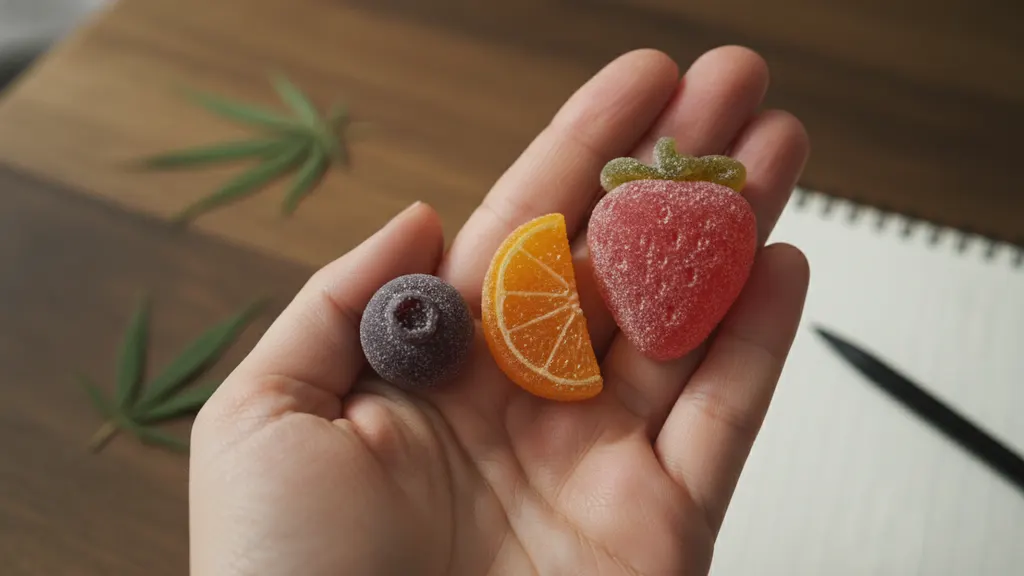
How many mg THC gummy for sleep, social, or creative use
How many mg THC gummy you want for sleep is not the same dose you want for a Friday night out. For sleep, most regular users land between 5 and 10 mg taken 60 to 90 minutes before bed, often paired with a low-dose CBD or CBN gummy. For social settings, 2.5 to 5 mg keeps a person present and chatty rather than couch-locked.
How many mg THC gummy a person wants for creative time depends on what creative means to them. Writers and musicians often report a sweet spot around 2.5 to 5 mg where ideas flow without losing the ability to type, play, or finish a thought. Above 10 mg, productivity usually drops while the experience itself can feel pleasant.
Mood matters. A 5 mg dose in a calm, familiar room is not the same 5 mg in a noisy party with strangers. New users do better at home, with a sober friend nearby, the first three or four times.
Combinations are another lever. CBN is associated with deeper rest, CBG with focus. A hemp-derived blend can keep total THC low while pulling the effect in a chosen direction. You can compare effects in our CBD vs THC gummy guide.
Mistakes new buyers make with dose
The four mistakes I see most often are dose-stacking too fast, mixing with alcohol on the first try, eating a fresh edible after an old one has already started to wear off, and ignoring the COA. Each is a quick fix once you know.
Dose-stacking too fast. Wait two hours, ideally three. Oral THC peaks late and a top-up too soon doubles the dose without you realising.
Mixing with alcohol. Alcohol amplifies the THC effect and the discomfort. Skip the drink on day one.
Stacking on top of a fading high. Once an edible has started to wear off, the body is more sensitive to a second dose than a first. Many bad nights start here.
Ignoring the COA. If the package label says 10 mg and the COA says 14 mg, that 40 percent gap can turn a comfortable dose unpleasant. Pull the COA every time, especially with a new brand.
For more on dose discipline, our delta-9 hemp gummy basics post covers the legal and chemistry side.
Frequently asked questions
How many mg THC gummy should a first-time user take?
Start with 2.5 mg of THC and wait at least two hours before considering another piece. Most adults feel a clear, gentle effect at 2.5 mg even with zero past cannabis use. A second 2.5 mg piece can be added once two hours have passed if nothing has happened, since oral THC peaks late. Anyone on prescription medication should consult a clinician first because of possible drug interactions, a point covered in cannabis safety material from the National Center for Complementary and Integrative Health. Stick with this routine for at least three sessions before going higher.
How many mg THC gummy is in a legal hemp-derived product?
Federal law caps delta-9 THC at 0.3 percent of dry weight, so a typical 4-gram gummy can hold around 12 mg of delta-9 THC and still meet the 2018 Farm Bill threshold signed into Public Law 115-334. Many products on the market hold 5 mg or 10 mg per piece, well inside that ceiling. States layer their own rules on top of the federal limit. Texas, California, and Florida all set extra labelling and packaging requirements through their state legislatures. Always check the package side panel and the COA against your state's rules before buying.
How long does a THC gummy take to kick in?
Onset for a hemp-derived edible runs 30 to 90 minutes, with peak effect around the 90-minute to two-hour mark, and a total duration of 4 to 8 hours. The wide range comes from differences in stomach contents, body weight, and individual liver enzymes that process THC. An empty stomach gives a faster onset but a sharper peak. A small meal with healthy fat softens the peak and stretches the experience. Pharmacokinetic studies indexed on PubMed describe this pattern across hundreds of subjects. Plan accordingly: a gummy at 6 p.m. can still affect 2 a.m. sleep.
Is hemp-derived THC the same as marijuana THC?
Chemically, delta-9 THC from a hemp-derived gummy is the same molecule as the delta-9 THC in a state-licensed dispensary product. The body cannot tell the source apart and the effects line up at equivalent doses, a point the FDA covers in its public guidance on cannabis-derived products. The legal difference is the dividing line. Hemp must come in under 0.3 percent delta-9 THC by dry weight, per USDA, while marijuana is anything above that threshold. State laws on possession, sales tax, age limits, and licensed retail set the rest.