
Can a hemp gummy actually help you recover from a hard training block, or is it wellness marketing dressed up in athlete photos? The honest answer sits between the two extremes, and it matters more than ever now that hemp gummies workout recovery routines are being sold to weekend lifters, marathoners, and CrossFit regulars alike. Below is what the peer-reviewed science says, what WADA and the NCAA actually allow, and how to vet a brand before you spend a dollar.
What cannabinoids actually do during hemp gummies workout recovery
NCCIH research confirms that post-exercise inflammation is a functional repair signal, not a flaw to suppress, so cannabinoids in a hemp gummies workout recovery routine are most valuable for sleep quality, perceived soreness, and parasympathetic wind-down after hard sessions rather than for blocking the adaptation response that makes training effective. The National Center for Complementary and Integrative Health is explicit that blunting this signal unnecessarily can interfere with tissue adaptation, which reframes what you should expect from any hemp-based recovery product. Hard training creates microscopic muscle damage, triggering a controlled inflammatory cascade that clears debris and rebuilds tissue stronger.
Cannabinoids like CBD interact with the endocannabinoid system (ECS), a body-wide signalling network comprising CB1 receptors concentrated in the central nervous system and CB2 receptors concentrated in peripheral immune tissue. The ECS governs pain perception, inflammatory modulation, stress adaptation, and sleep-wake cycling, making it the primary biological target for cannabinoid-based recovery products. Preclinical work summarised in the 2020 Sports Medicine systematic review on PubMed shows CBD reduces inflammatory cytokines in animal models, though whether that translates to a meaningful edge for a human runner logging 60-mile weeks remains the open question.
CBD, THC, and the evidence base for hemp gummies workout recovery
The 2020 Sports Medicine systematic review found no high-quality human clinical evidence that CBD or THC meaningfully shortens recovery time, even though CBD carries the larger preclinical anti-inflammatory literature; that evidence gap is the most important context for any athlete choosing a hemp gummies workout recovery product over a proven conventional approach. Sample sizes under 30, short washout periods, and inconsistent dosing were flagged as the field's biggest methodological problems, and neither cannabinoid has produced a landmark human trial that would satisfy a sports medicine department.
Low-dose THC has been studied more in pain populations than in athletes. The Mayo Clinic patient education library notes that psychoactive doses interfere with motor coordination and decision-making, which is a reasonable argument against pre-workout THC even where it is legal. Post-workout, a small dose of hemp-derived delta 9 combined with CBD is what many recreational users report anecdotally, though the peer-reviewed head-to-head data is still thin. For a deeper split, see our comparison of CBD vs THC gummies for different goals.
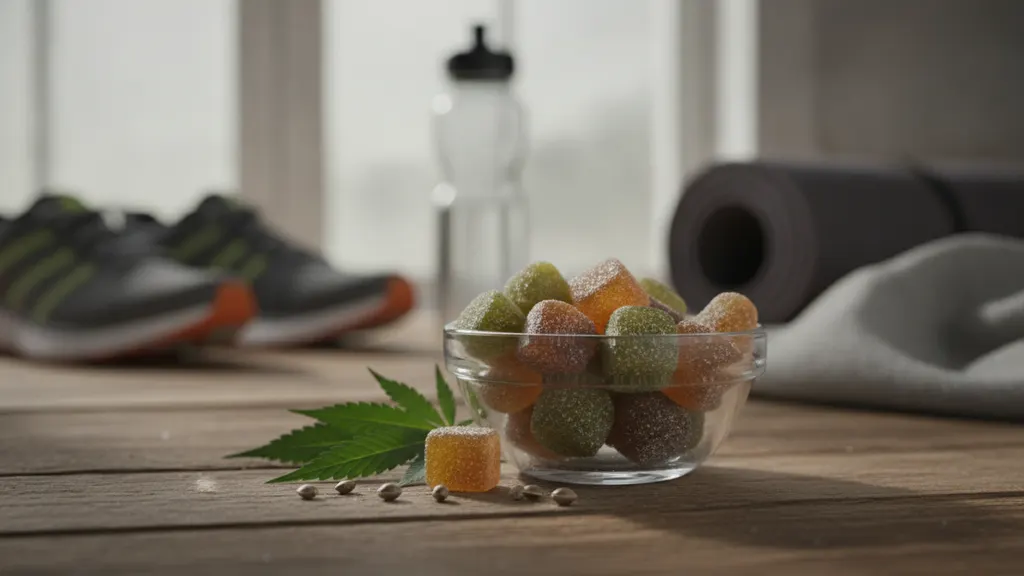
WADA, NCAA, and pro league rules for hemp gummies workout recovery
WADA removed pure CBD from its Prohibited List effective January 1, 2018, but THC and every other cannabinoid, including delta 8, HHC, and synthetic analogues, remain prohibited in-competition for every athlete under the WADA code, making the compliance picture for hemp gummies workout recovery more layered than a simple yes or no. The US Anti-Doping Agency confirms this status annually and advises US athletes on national code compliance. Athletes in any tested program should verify current cannabinoid restrictions at wada-ama.org before each competitive season, as the prohibited list is updated each January.
The NCAA maintains a separate banned-substance list that still includes THC, though the threshold was raised in 2022. Major North American pro leagues have relaxed cannabis policy since 2020, but each league sets its own testing calendar and threshold. If you are subject to any tested program, the safe path is CBD isolate backed by a certificate of analysis (COA), a batch-specific lab report that documents cannabinoid potency, contaminant screening results, and the lot number linking findings to the exact product you purchased; a COA showing non-detect THC and a written brand statement is the minimum standard for a tested athlete. Full-spectrum products, even at legal 0.3% THC levels under the 2018 Farm Bill, carry real positive-test risk with daily use.
| Sport body | CBD status | THC status |
|---|---|---|
| WADA (Olympic) | Permitted since Jan 1, 2018 | Prohibited in-competition |
| NCAA | Not on banned list | Banned, threshold raised 2022 |
| NFL | Not tested | Threshold raised, discipline relaxed |
| MLB | Not on banned list | Removed from banned list 2019 |
For a closer look at this, see Can you fly with hemp gummies? TSA rules and state laws 2026.
Timing, dose, and stacking for hemp gummies workout recovery
Cleveland Clinic patient education data shows hemp gummies and other oral edibles take 45 to 120 minutes to reach peak plasma concentration and maintain effects for 4 to 8 hours, which places the practical window for hemp gummies workout recovery squarely in the post-session evening rather than the 30 minutes before you touch the barbell. The Cleveland Clinic patient library notes this pharmacokinetic profile aligns with sleep windows rather than warm-up periods.
A reasonable starting protocol for a healthy adult: 25 mg CBD, or a low-dose 2.5 to 5 mg THC gummy where legal, taken 60 to 90 minutes before bed on training days. Hold that dose constant for at least seven days before adjusting so you can actually separate signal from placebo. For more on gentle daytime use, our guide on microdosing THC gummies covers thresholds most people tolerate without impairment.
For a closer look at this, see Hemp Gummies for Focus: Low-Dose Daytime Strategies That Work.
Vetting a hemp gummies workout recovery brand: COAs, sourcing, and label honesty
Dozens of warning letters from the US Food and Drug Administration over the past five years have targeted hemp brands over mislabeled potency or undisclosed contaminants, making a batch-verified certificate of analysis the single most important quality signal before adding any hemp gummies workout recovery product to a training stack. FDA enforcement records also cover brands making unapproved drug claims about hemp products. A good brand publishes a batch-specific COA from an ISO/IEC 17025 accredited laboratory. ISO/IEC 17025 is the international calibration and testing standard that requires documented analytical methodology, equipment traceability, and inter-laboratory proficiency rounds to ensure reproducible results. The COA should match the batch or lot number on the package and report cannabinoids within 10% of label claim plus non-detect results on heavy metals, pesticides, residual solvents, and microbials.
Read the COA yourself; do not take a brand's word for it. Our step-by-step walkthrough on how to read a COA for hemp gummies shows exactly which numbers matter for a recovery-focused athlete, and what a red flag looks like. Cross-reference the brand's cultivation claims against USDA hemp production guidelines and check whether the brand is transparent about its extraction method and source state.
Frequently asked questions
Are hemp gummies allowed for tested athletes under WADA rules?
Pure CBD was removed from the WADA Prohibited List effective January 1, 2018, so CBD-only products are not banned in or out of competition. However, THC and every other cannabinoid remain prohibited in-competition, and many hemp-derived gummies contain trace or intentional THC. The World Anti-Doping Agency publishes the current list at wada-ama.org each year. Tested athletes who choose a hemp gummy should insist on a batch-specific COA showing THC below the label claim and understand that a positive urine test can still result from residual THC exposure.
What does the research say about CBD and muscle recovery?
A 2020 systematic review in Sports Medicine indexed on PubMed found insufficient high-quality clinical evidence that CBD improves exercise performance or shortens recovery time in humans. The reviewers acknowledged anti-inflammatory activity in preclinical animal models but concluded that human trials remain small, short, and heterogeneous. NCCIH echoes that most botanical supplements marketed for post-exercise recovery have not met the bar for FDA drug approval. The honest read: mechanisms are plausible, human evidence is thin, and any hemp-derived gummy should be positioned as a wellness routine addition, not a performance drug.
When should I take a hemp gummy around training?
Sports medicine clinicians who discuss cannabinoid use in patient education material at Mayo Clinic and Cleveland Clinic generally note that oral edibles take 45 to 120 minutes to reach peak plasma concentration and can last 4 to 8 hours. That pharmacokinetic profile makes gummies a poor fit for immediate pre-workout use; the optimal window for a hemp gummies workout recovery routine is the post-session evening, when soreness, restlessness, and sleep quality matter most. Start low, take with a small amount of dietary fat to aid absorption, and log how you feel across a two-week window before adjusting.
How much CBD is a reasonable starting dose for recovery?
Published human trials cited in the 2020 Sports Medicine review used CBD doses ranging from roughly 15 mg to 300 mg, with most recovery-focused protocols clustering between 25 and 50 mg per serving. Because the FDA has not approved CBD as a supplement for exercise recovery, there is no official recommended dose. A sensible starting point for a healthy adult is one 25 mg gummy taken in the evening after a hard session, held constant for at least a week before titrating up. Anyone on prescription medication should read our guide to hemp gummies drug interactions first.
Will a hemp gummy make me fail a workplace or NCAA drug test?
Standard urine immunoassays screen for THC metabolites, not CBD. A pure CBD isolate gummy with a COA showing non-detect THC is unlikely to trigger a positive, but full-spectrum hemp gummies legally contain up to 0.3 percent THC by dry weight under the 2018 Farm Bill and can accumulate with daily use. NCAA policy still lists THC as a banned substance in season. Any athlete subject to random testing should choose an isolate product with a batch-specific COA and read our detailed hemp gummies drug test guide before use.
What should I look for on a hemp gummy COA before buying?
A trustworthy COA is issued by an ISO 17025 accredited third-party lab, matches the batch or lot number printed on the package, and reports cannabinoid potency within 10 percent of the label claim. It should also show non-detect results for the four heavy metals (lead, cadmium, arsenic, mercury), residual solvents, pesticides on the state action list, and microbial contaminants. FDA warning letter enforcement over the past five years has flagged brands whose COAs did not match packaging. Our full walkthrough on how to read a hemp gummy COA breaks down every panel line by line.