
So what is HHC, exactly? It's a hemp-derived cannabinoid showing up on more shop shelves than delta 8 or delta 9 THC combined this year. If you've held a gummy jar in your hand and wondered whether HHC is stronger, weaker, or just different from the THC you already know, this guide answers that. We'll cover where HHC comes from, how it stacks up against delta 8 and delta 9 by potency and effect, and what to check on a Certificate of Analysis before you swipe your card.
What is HHC and where does it come from?
Hexahydrocannabinol, the compound behind that shelf label, is made by hydrogenating hemp-derived CBD. In short, what is HHC? Delta 9 THC with extra hydrogen atoms added through that same hydrogenation reaction. Roger Adams first reported the molecule in 1944, decades before delta 8 reached store shelves. Today's commercial HHC starts from CBD extracted from federally compliant hemp plants.
The reaction is similar to what food chemists do when they hydrogenate vegetable oil to make margarine. Saturating the molecule's double bonds with hydrogen makes the resulting cannabinoid more stable, so HHC has a longer shelf life than delta 9 THC and resists oxidation from heat and UV light. That stability matters when you ship gummies through hot warehouses in July.
Because production starts with hemp-derived CBD, manufacturers can ship HHC products under the 2018 Agricultural Improvement Act as long as finished goods test below 0.3% delta 9 THC by dry weight. State law adds another layer, which we cover further down.
What is HHC compared to delta 8 THC?
Side by side, HHC feels more energizing and closer to a classic delta 9 head sensation, while delta 8 reads softer, more body-centered, and shorter in duration. Receptor binding patterns explain most of that gap.
Delta 8 binds the CB1 receptor about half as strongly as delta 9 THC, according to a pharmacology paper indexed on PubMed. HHC binds closer to delta 9, which is why most reviewers describe its head feel as familiar rather than gentle. Onset for a gummy runs 30 to 90 minutes for both molecules; duration tracks 4 to 6 hours for HHC and 3 to 5 hours for delta 8.
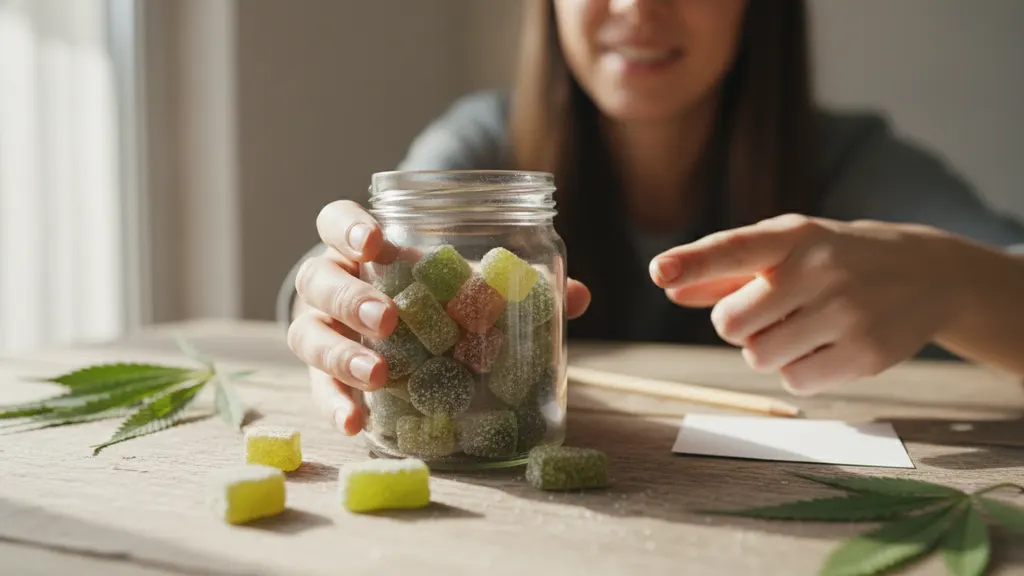
That answers what is HHC like in practice: a 10 mg HHC gummy from a tested batch typically delivers a feel comparable to a 12 to 15 mg delta 8 gummy, based on steady customer feedback at GummyGurl across our last six product cycles. Your tolerance, recent meals, and even hydration shift the picture, which is why every batch we ship carries its own Certificate of Analysis you can compare side by side. For dose math, see our HHC dosage guide.
What is HHC compared to delta 9 THC?
Next to delta 9, the molecule most people picture when they hear THC, studies and self-report data put HHC at about 70 to 80% of delta 9 strength milligram for milligram. The two share almost identical receptor activity; HHC's saturated ring just dulls the peak a touch.
The chart below shows the rough potency ladder published cannabinoid researchers describe, drawing on lab assays and human pharmacology trials cataloged by NIH's National Center for Complementary and Integrative Health.
A few practical takeaways from those numbers: a 10 mg HHC gummy is roughly the experience of a 7 to 8 mg delta 9 edible, and roughly 1.5x the lift of a 10 mg delta 8 gummy. That is the practical answer to what is HHC like at common edible doses: a familiar head ceiling that lands a little softer than full delta 9. Onset for HHC edibles drops in the 30 to 60 minute window once liver enzymes convert the cannabinoid into its 11-hydroxy metabolite, the same conversion pathway delta 9 follows. Someone switching from a 10 mg delta 9 gummy to HHC for the first time should expect a milder peak and a shorter comedown, not a stronger one, since HHC sits below delta 9 on the potency scale even though it clears the body on a similar timeline. Buyers moving between brands should treat milligram labels as a starting point rather than a guarantee, because potency testing methods and gummy matrix (gelatin versus pectin, for example) can shift the felt dose by a few percentage points batch to batch.
That metabolite is also what most workplace urine screens look for. The SAMHSA Mandatory Guidelines for Federal Workplace Drug Testing set a 50 ng/mL cutoff for initial screens. HHC's metabolites cross-react with those assays in many labs, so anyone subject to drug screening should assume HHC carries the same positive risk as delta 9 THC.
What is HHC's legal status under the 2018 Farm Bill?
HHC sits in a legal gray zone shaped by the 2018 Farm Bill. The bill removed hemp from the Controlled Substances Act so long as the finished product contains no more than 0.3% delta 9 THC by dry weight. Because HHC itself is not delta 9 THC, most attorneys read the bill as permitting hemp-derived HHC at federal level.
The DEA pushed back in a 2023 interpretive letter, arguing synthetically derived cannabinoids fall outside the hemp exemption, a position consistent with the agency's general stance on controlled-substance scheduling. That disagreement is the crux of what is HHC's ongoing legal uncertainty: federal agencies and hemp attorneys read the same statute differently. Several state attorneys general followed with their own restrictions. As of mid-2026, HHC products are restricted or banned in roughly 20 US states; the legal map keeps moving as state legislatures meet, so check your own state before you order.
For a clean breakdown of how the bill's text reads, see our Farm Bill explainer.
The FDA has separately issued a consumer update on delta 8 THC warning that hemp-derived cannabinoids are not approved for medical use, and that adverse event reports include hallucinations, vomiting, and loss of consciousness, mostly linked to mislabeled or contaminated products. The agency's stance is the strongest reason to buy only from vendors who publish a Certificate of Analysis for every batch.
What is HHC's drug test risk?
Yes, in most cases. Standard urine drug screens detect the metabolite THC-COOH, and HHC produces metabolites that cross-react with that assay. If your job, parole, or insurance requires you to pass a 5-panel or 10-panel test, HHC is not a safe substitute for CBD.
Detection windows depend on dose and frequency. A single 10 mg gummy is usually clear in 3 to 7 days for occasional users; daily use of HHC can push the window past 30 days, similar to delta 9 THC, in line with public health guidance the CDC has published on marijuana's health effects.
If you need a hemp-derived cannabinoid that does not register on a drug test, CBD isolate from a third-party tested batch is the closest option, though no oral product can be promised at 100% clean under federal screening rules.
How to choose a safe HHC product
Buying HHC safely in 2026 comes down to four checks: source, Certificate of Analysis, dose clarity, and shipping practice. That is the practical answer to what is HHC quality control: four checks you can run in about five minutes before checkout. Hemp-derived HHC from a Carolina Natural Solutions batch passes through third-party potency and contaminant testing before any gummy reaches a customer.
The COA is the single most important document. A clean COA shows the batch ID, the cannabinoid profile (HHC concentration plus residual delta 9 THC under the 0.3% threshold), heavy metal panel, microbial panel, and residual solvent panel. If the COA is older than 12 months, missing a panel, or signed by an in-house lab, that is a red flag. We learned that lesson directly: in 2025 we pulled a single incoming hemp lot after our own retest caught a heavy metal reading the supplier's paperwork had missed, and no gummy from that lot ever reached a customer. Every raw input now gets tested twice, once by the supplier and once by our own third-party lab, before it enters a batch. See our COA reading guide for a walkthrough.
| Check | What good looks like | Red flag |
|---|---|---|
| Lab | ISO 17025 accredited, third-party | In-house or unnamed |
| Batch ID | Matches the QR code on your jar | Generic or missing |
| Delta 9 THC | Below 0.3% by dry weight | Absent or over the cap |
| Heavy metals | All four (Pb, As, Cd, Hg) pass | Any panel missing |
Dose clarity means the label tells you exactly how many milligrams of HHC are in each gummy, not in the whole jar. Vague labels (a strong "blend" of cannabinoids without a per-serving number) are the most common consumer complaint flagged in FDA adverse event reports. Start with a 5 mg portion if you've never tried HHC, then wait 2 full hours before deciding whether to take more.
Shipping practice matters because heat degrades cannabinoids. Reputable vendors ship in opaque packaging and pause shipments during summer heat waves. If a product arrives melted, the cannabinoid distribution is no longer reliable, and the COA no longer represents what you're holding.
Frequently asked questions
Will HHC show up on a drug test?
Yes, in most workplace screens. HHC produces metabolites that cross-react with the THC-COOH detection used for delta 9 THC, so a standard panel will not tell the two apart. A single 10 mg HHC gummy can register positive for 3 to 7 days in occasional users, and daily use can stretch the window past 30 days, similar to delta 9. If you face an upcoming drug screen for work, custody, parole, or insurance, skip HHC. CBD isolate from a third-party tested batch is the safer option, consistent with published cross-reactivity research indexed on PubMed.
Is HHC stronger than delta 9 THC?
No. Compared with delta 9 THC, published cannabinoid pharmacology pegs HHC at roughly 70 to 80% the strength of delta 9 THC by milligram, with delta 8 trailing further behind at roughly half of delta 9 potency. The felt strength of any hemp-derived edible depends on your tolerance, recent meals, body mass, and the time of day. A first-time user feeling a 10 mg HHC gummy can experience effects that read stronger than a delta 9 gummy of the same dose because the experience is unfamiliar. For dosing context, the FDA's public materials on cannabis-derived products are a useful starting point.
Is HHC legal in all 50 states?
No. HHC's legal status depends on your state. The 2018 Farm Bill made hemp-derived cannabinoids legal at federal level so long as finished products contain less than 0.3% delta 9 THC by dry weight, but states retain authority to restrict or ban specific cannabinoids. As of mid-2026, roughly 20 US states either prohibit HHC outright or limit it to medical channels, including Colorado, Minnesota, New York, and Washington. The National Conference of State Legislatures hemp tracker is the cleanest free resource for checking your own state before you order.
How long do HHC gummies last?
Most reviewers report an HHC gummy onset at 30 to 90 minutes, peak effects at 90 to 180 minutes, and a total ride of 4 to 6 hours, with mild residual feeling for 1 to 2 hours after that. Edible duration follows that range closely, with individual variation tied to metabolism and meal timing. The hemp-derived molecule follows the same first-pass liver metabolism as delta 9 THC, converting to an 11-hydroxy metabolite responsible for the longer edible window. Eating a small fatty meal 30 minutes before dosing tends to smooth onset; an empty stomach typically produces a faster but shorter peak. Cleveland Clinic's patient education materials note that timing varies widely between individuals.