
“What actually goes into these before they reach my mailbox?” It is one of the most common questions hemp shoppers ask, and it deserves a straight answer. Knowing how hemp gummies are made tells you whether a batch is worth your money: the extraction method sets the cannabinoid profile, the cook decides potency accuracy, and a third-party lab report proves the 0.3 percent federal THC limit was respected before shipping.
Understanding how hemp gummies are made starts with the extract
Ask how hemp gummies are made and the honest answer begins weeks before the kitchen. Harvested hemp is dried, milled into coarse biomass, and often gently heated so acidic cannabinoids convert to their active forms. Only then does a solvent pull the oil that will later be dosed into candy.
That crude oil is rarely used as is. Winterization chills it in ethanol so waxes and lipids drop out, filtration removes the solids, and wiped-film distillation concentrates the cannabinoids into a thick golden distillate. Producers who want an isolate go further, using chromatography or crystallization to strip everything except the target molecule. Each extra step trades minor cannabinoids and terpenes for precision, which is why full spectrum, broad spectrum, and isolate gummies feel different at the same milligram count.
Hemp also sits in a specific legal box. The 2018 Farm Bill (Pub. L. 115-334) on Congress.gov removed hemp from the controlled substances definition of marijuana as long as it stays at or below 0.3 percent Delta-9 THC on a dry-weight basis, and the USDA Agricultural Marketing Service hemp program rules describe how sampling and laboratory testing are handled. Growers over that line must remediate or destroy the crop, so compliance pressure starts in the field, long before anything reaches a packaging table.
CO2 versus ethanol: how hemp gummies are made changes with the solvent
Two solvents dominate hemp extraction, and the choice shapes the finished candy more than most labels admit. Supercritical CO2 runs clean and selective; food-grade ethanol runs fast and pulls a fuller plant profile. Both can produce a compliant extract, and both leave fingerprints on flavor and color.
Carbon dioxide behaves strangely under pressure. Past roughly 31 degrees Celsius and 1,071 psi it turns supercritical, moving through plant material like a gas while dissolving oils like a liquid. Operators tune those two dials to pull cannabinoids and light terpenes while leaving heavier waxes behind, and because the CO2 returns to a gas at room pressure, no solvent stays in the oil. Residual solvent expectations sit in the same family of thinking as FDA guidance materials for botanical drug development.
Ethanol works differently. Chilled ethanol washes the biomass and strips cannabinoids quickly, which scales well for large volumes, but it also grabs chlorophyll and waxes that get filtered out later. The ethanol then has to be recovered and the extract verified as clean. Neither route is automatically better; the question worth asking a brand is which one it uses and whether the lab report backs the answer.
| Factor | Supercritical CO2 | Food-grade ethanol |
|---|---|---|
| Operating window | About 31 degrees Celsius at 1,071 psi | Chilled well below room temperature, ambient pressure |
| Solvent residue | CO2 returns to a gas, so nothing is left in the oil | Must be recovered, then verified by lab testing |
| What it pulls | Selective: cannabinoids and lighter terpenes | Broad: cannabinoids plus chlorophyll and waxes |
| Post-processing | Lighter winterization load | Usually needs winterization and filtration |
| Equipment cost | Higher upfront | Lower upfront |
Once you see how hemp gummies are made at the solvent stage, two products with identical milligram counts stop looking identical: a CO2 distillate gummy often tastes close to neutral, while an ethanol-run full spectrum gummy carries more of the plant with it.
Inside the depositing line: how hemp gummies are made at commercial scale
At scale, gummy production looks like candy manufacturing with one extra discipline: dose control. A gelling base is cooked, the hemp-derived extract is emulsified into it, the slurry is deposited into molds, and every batch is sampled so the label number matches what a customer actually eats.
The base is usually pectin, which is fruit-derived and sets with acid and calcium, or gelatin, which is animal-derived and sets as it cools. Sugar, glucose syrup, and water are cooked to a target solids level, then held while the cannabinoid input goes in. Because cannabinoid oil and water do not mix, the extract is first blended into a carrier oil or turned into an emulsion so it disperses evenly. Skip that and you get hot spots: some pieces overdosed, others nearly blank. Dose accuracy is the hardest part of how hemp gummies are made, and it is where cheap production shows.
From there the slurry runs into starch molds or silicone depositors, dries in a conditioning room for a day or more to reach target moisture, then gets tumbled in sugar, sour coating, or a light oil dusting so pieces do not stick. Drying time is not cosmetic: moisture left too high invites microbial growth, and moisture pulled too low gives you a rubbery piece. If you are working out what a milligram figure feels like in practice, the beginner dosage guide is a better guide than pouch artwork.
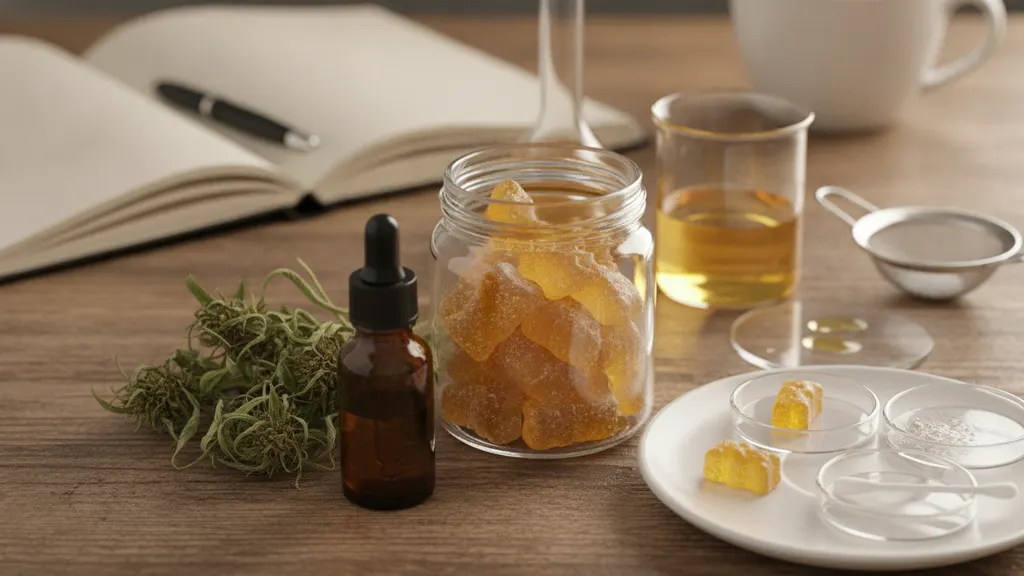
How hemp gummies are made stays accountable: what lab testing proves
A certificate of analysis is the receipt for everything upstream. It should confirm potency per piece, Delta-9 THC below the federal 0.3 percent dry-weight line, and clean results for residual solvents, pesticides, heavy metals, and microbials, with a batch number you can match to your pouch.
I learned this the hard way at our co-packer's facility in Asheville, North Carolina, where GummyGurl's first 400-unit batch of 25 mg gummies came back from the lab at 0.34 percent Delta-9 THC on a dry-weight basis, four hundredths of a point over the federal line, because a supplier shipped biomass grown right at the edge of that threshold. We destroyed the batch rather than dilute it and ship it anyway, and we now require a pre-extraction COA on every incoming lot of biomass, not just a post-production one. That single rejected batch is why every GummyGurl pouch today carries two lab reports instead of one, and it is the reason I tell shoppers to check the batch number before they check the flavor.
The 0.3 percent threshold is not a marketing number. It is the statutory line that separates hemp from a controlled substance, written into the 2018 Farm Bill and checked through laboratory testing under the USDA program. The agency position on finished consumer products is separate and stricter than many shoppers assume, and the FDA page on regulation of cannabis and cannabis-derived products is the plainest summary of where federal policy stands. Testing is also why how hemp gummies are made can differ from brand to brand while the legal outcome stays the same.
Read the report, not just the QR code. Check the collection date, the lab name, and whether potency is listed per gummy or per package. If a drug test is on your mind, full spectrum products legally carry trace THC, which the drug testing guide covers in detail. Agencies including the Centers for Disease Control and Prevention have flagged mislabeled cannabinoid products as a real-world hazard, and independent testing is what catches that.
Ingredients that change potency, safety, and absorption
An ingredient list is short, but every line does work. The gelling agent sets texture and decides whether the product is vegan, the carrier oil influences how much cannabinoid reaches your bloodstream, and the acids, colors, and sweeteners control flavor, shelf life, and appearance.
Carrier fats are the part most shoppers skip. Cannabinoids are fat-soluble, so pairing them with a lipid such as MCT or coconut oil can raise the share that gets absorbed, partly by routing some of the dose through the lymphatic system instead of straight through first-pass liver metabolism. Pharmacokinetic work indexed on PubMed, the NIH biomedical literature database, reports that lipid effect across oral cannabinoid formulations. The NCCIH overview of cannabis and cannabinoids is a level-headed read on what the evidence does and does not support.
Pectin versus gelatin is the next fork. Pectin keeps a product plant-based and holds up better in heat, while gelatin gives the classic chew; the clean-label vegan guide walks through both. Sweeteners run from cane sugar and tapioca syrup to allulose and sugar alcohols, which can upset some stomachs at larger servings. Colors from fruit and vegetable juice fade faster than synthetic dyes, and that fading is also a clue about how you store them. Knowing how hemp gummies are made on the ingredient side makes a label far easier to judge.
Frequently asked questions
How hemp gummies are made, step by step?
Hemp is harvested, dried, and milled, then a solvent pulls cannabinoid oil out of the plant material. That crude oil is winterized and distilled into a concentrated extract. In the kitchen, a pectin or gelatin base is cooked with sugars and water, the extract is emulsified into it with a carrier oil, and the slurry is deposited into molds, dried, and coated. Every batch then goes to an independent lab. In short, how hemp gummies are made is one extraction process plus one candy process plus one testing step, all constrained by the 0.3 percent THC line set in the 2018 Farm Bill text on Congress.gov.
Is CO2 extraction better than ethanol for gummies?
Neither method wins outright. Supercritical CO2 is selective and leaves no solvent behind, since the CO2 simply returns to a gas, which suits brands that want a neutral-tasting distillate. Ethanol is faster and cheaper at volume and carries more of the plant with it, but the ethanol has to be recovered and the batch verified for residual solvent before release. What matters to a buyer is not the logo on the equipment: it is whether the certificate of analysis shows clean residual solvent results. The FDA cannabis regulation page explains why that documentation carries weight.
Why do some gummies hit harder than others at the same milligrams?
Three things usually explain it: the carrier, the spectrum, and your stomach. A lipid carrier such as MCT or coconut oil can move more of the dose through lymphatic absorption rather than first-pass liver metabolism, an effect described in pharmacokinetic studies indexed on PubMed. Full spectrum extract brings minor cannabinoids and trace THC that broad spectrum and isolate do not. And food in your system changes absorption noticeably. So part of how hemp gummies are made, specifically the fat they are made with, shows up in how the same number on two labels feels different.
What should a certificate of analysis show?
Look for five blocks: cannabinoid potency per gummy, Delta-9 THC under 0.3 percent by dry weight, residual solvents, pesticides and heavy metals, and microbial results. The report should name the testing lab, carry a collection or issue date within the last year, and show a batch or lot number that matches the pouch in your hand. The USDA hemp program rules describe the sampling and laboratory framework behind that THC number. If a brand only shows a generic report with no batch identifier, you cannot tie it to the gummies you bought.
Are hemp gummies legal to buy in the United States?
Federally, hemp and hemp-derived products that stay at or below 0.3 percent Delta-9 THC by dry weight were removed from the controlled substances definition of marijuana by the 2018 Farm Bill. States set their own rules on top of that, and several restrict intoxicating hemp cannabinoids, age of purchase, or milligram caps per serving. The National Conference of State Legislatures tracks those differences. Before ordering, check your own state position, and be aware that legal status and shipping policy can change faster than product pages get updated.
Does the manufacturing process affect how long gummies stay potent?
Yes. The drying step sets moisture, the gelling agent sets heat tolerance, and the packaging decides oxygen and light exposure. Cannabinoids break down with heat, light, and air, so a pouch left in a hot car fades faster than one kept sealed in a cool, dark cupboard, and pectin tends to hold its shape better than gelatin in warm rooms. Check the packaging or best-by date, and buy from brands that publish current batch testing, which consumer health explainers such as the Cleveland Clinic health library also recommend. That last stretch of how hemp gummies are made, drying and sealing, quietly protects the number on the label.